Editorial & Insights

The Community Digest

Wholesome perspectives on productivity, mindfulness, and practical habits. Written and curated to help you organize, optimize, and live with intention.

Warm journal header with notebook, fountain pen, fresh coffee, and eucalyptus

Featured Essays

Mindset

Feeling Lost? Try This Exercise

A practice I've done since I was a child, and what actually changed.

Calm seated meditation practice

I grew up around this one. My family practised Falun Gong, so the exercises were just part of the house — something you did, like eating breakfast. I didn't think about it much as a kid. In college I started taking it seriously, which mostly meant I started reading rather than just moving.

Here's the plain description. Falun Gong, also called Falun Dafa, is a meditation practice with four standing exercises and one sitting meditation. The movements are slow and gentle — closer to tai chi than to a workout. Underneath them is a moral philosophy built on three principles: Truthfulness, Compassion, Tolerance.

It was introduced publicly in China in 1992 and spread quickly — by the end of the decade an estimated 100 million people in China were practising. It's now done in more than 100 countries. It has always been taught free of charge. There is nothing to buy, no membership, no fee, no app. You can learn the exercises from a group in a park or from the instructions online, and that is the entire cost.

What it actually changed

I was a confrontational teenager. Defensive, quick to argue, certain I was being wronged more often than I was. If you had asked me then, I'd have said I was just standing up for myself.

The shift wasn't dramatic and it wasn't quick. What changed is where my attention goes when something goes wrong. My instinct used to be to look outward — whose fault, what they did, why it wasn't fair. Now the first move is to look at my own part in it. Not as self-punishment. Just as the more useful question.

That's the whole of it, and it sounds small written down. It isn't. Most of the friction in an ordinary day comes from the gap between what happened and how much you've decided it means. Tolerance, in the sense the practice uses the word, is the work of narrowing that gap — and it's work, every time, not a state you arrive at.

If you want to try it

The exercises are free and public. faluninfo.net has the background, and most towns have a practice group that will teach you at no cost. You don't have to believe anything in advance. Learn the movements first; the rest either resonates or it doesn't.

I'm not claiming this will fix anything for you. I'm saying it made me a more patient person than I was going to be otherwise, and that it cost nothing.


Productivity

Stop Procrastination in Its Tracks

Two habits that work on the cause instead of the symptom.

Calm morning desk workspace

Most advice about procrastination is really advice about scheduling. Make a list, block your calendar, try a timer. It works until the day you don't feel like it, which is the day you needed it.

Two things have actually held up for me. Neither is a scheduling trick.

1. Sort honestly: delete, defer, or do

Sit with your list and put every item into one of three piles.

Delete. Things you have been carrying for months and will never do. Say so. Take them off the list. The relief is immediate and the list gets honest for the first time in a while.

Defer. Things that matter but not this week. Give each one a date. “Later” is not a date — a deferred item without a date is a deleted item you haven't admitted to.

Do. What's left. This pile should be short. If it isn't, you were dishonest in the first two piles.

Do this weekly, not once. Priorities drift, and a list you never re-sort slowly fills with things you have silently agreed to ignore. The point isn't to get more done. It's to stop paying attention tax on work you were never going to start.

2. Ask why five times

The other half of procrastination is guilt, and guilt is a bad signal because it tells you something is wrong without telling you what.

When you catch yourself avoiding something, ask why. Then ask why about the answer. Five times, roughly — you'll usually hit the real thing by three or four.

I'm avoiding the invoice. Why? Because it's annoying. Why is it annoying? Because I have to look up what I charged. Why don't I know what I charged? Because I never wrote it down. Why not? Because I don't have anywhere to write it down.

Now the problem isn't procrastination. It's a missing file, and that takes ten minutes to fix — and it won't come back next month.

This technique comes from manufacturing, where it's used to trace a defect back past its symptoms. It works the same way on yourself. The first answer is almost always the excuse. The fourth is usually the cause.

Why these two and not a timer

Timers and tricks work on the moment. Sorting and the Five Whys work on the list and the cause. You need the first kind on a bad afternoon. You need the second kind if you want fewer bad afternoons.

Financial Wellness

Don't Let “Lifestyle Creep” Drain Your Bank Account

Why raises disappear, and a budget shape that survives one.

Organized financial journal and pen

Lifestyle creep is the tendency for personal spending to rise as income rises. It is not a moral failing and it is not reckless. It's just quiet. You get a raise in March, and by September your normal has moved up to meet it. The subscriptions, the deliveries, the upgraded version of a thing you already owned. Nothing on the list looks like the problem. The list is the problem.

The test is simple: if your income went up in the last two years and your savings rate didn't, the money went somewhere and you can't name it.

A budget shape that holds: 50 / 30 / 20

Take your take-home pay and split it three ways.

  • 50% needs. Rent or mortgage, utilities, groceries, insurance, transport, minimum debt payments. Things that have consequences if you skip them.
  • 30% wants. Eating out, subscriptions, hobbies, travel, the collectible you've had your eye on. This is not the guilt category. It's the reason the plan survives.
  • 20% savings and debt. Emergency fund first, then retirement, then anything beyond the minimum on debt.

The percentages are a shape, not a law. In a high-rent area needs will run past 50%, and the honest move is to shrink wants rather than pretend. What matters is that all three have a number and you know what yours actually are right now. Most people have never checked, and the checking is most of the value.

What makes it creep-proof

Because the categories are percentages, not amounts, a raise doesn't quietly land in “wants”. It splits three ways automatically, and your savings go up in the same month your income does.

Two habits make it stick:

Automate the 20% first. Move it on payday, before it's visible in your checking account. Money that never appears is money you don't budget around.

Audit the background leaks once a year. Not the coffee — the things you're paying for and forgot. The streaming service nobody has opened since spring, the app that renewed annually at a price you never agreed to twice. This is where creep actually hides, and it's dull work that takes an hour and pays for itself.

Don't cut the thing you enjoy

The failure mode of budgeting advice is treating the 30% as waste. It isn't. A plan that eliminates everything you like will last about six weeks, and then you'll abandon the whole system including the part that was working.

Spend deliberately on the few things that genuinely improve your days — good coffee with a friend, a piece you'll still own in twenty years — and be ruthless about the rest, which you won't miss because you'd already stopped noticing it.

Curated Finds

Hugh's Top Picks

Everyday tools for cooking, productivity, and personal care that we personally use and stand behind.

ℹ️ As an Amazon Associate, Hugh's Collection earns from qualifying purchases.
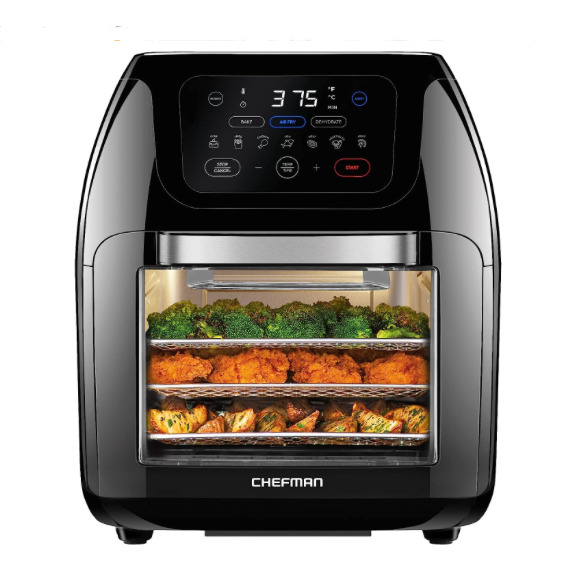
Chefman Digital Air Fryer
Kitchen & Home

Chefman Digital Air Fryer

Crisp, fast, healthy meals with minimal oil and easy cleanup.

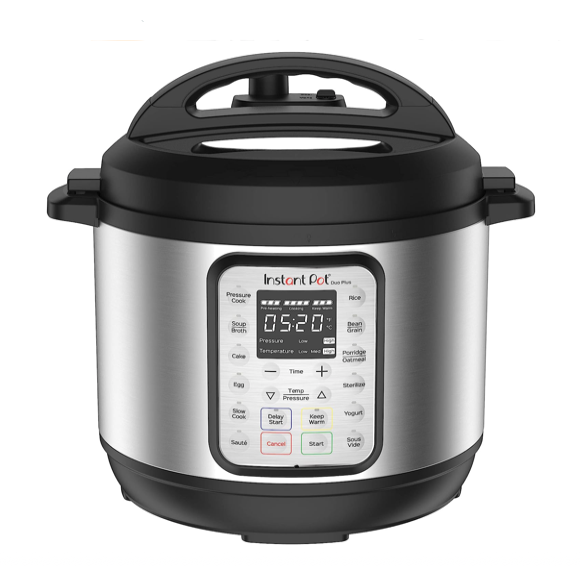
Instant Pot Duo Plus 9-in-1
Kitchen & Home

Instant Pot Duo Plus 9-in-1

Pressure cook, slow cook, steam, and saute in one reliable pot.

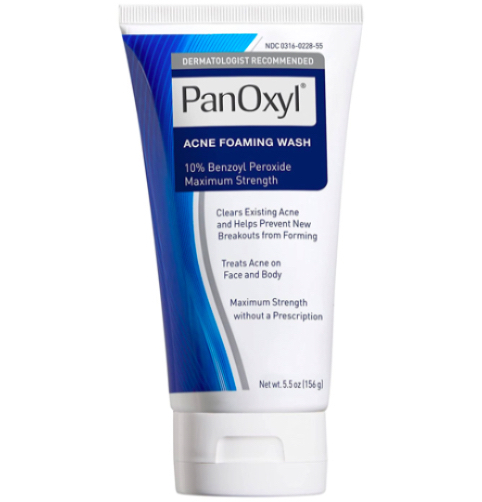
PanOxyl 10% Acne Foaming Wash
Wellness & Skincare

PanOxyl 10% Acne Foaming Wash

Dermatologist-recommended maximum strength antimicrobial wash.

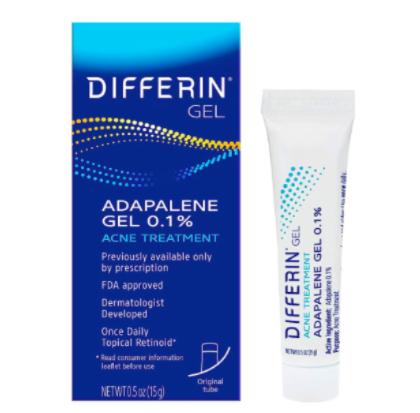
Differin Adapalene Gel 0.1%
Wellness & Skincare

Differin Adapalene Gel 0.1%

Prescription-strength retinoid gel for clear, balanced skin texture.